Helena Strigård: The New Rules of Global Partnering


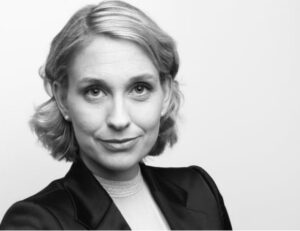
Helena Strigård, CEO Venture Accelarated and columnist, Pharma Industry.
Collecting testimonies straight off the partnering frenzy at BioEurope, from JP Morgan Healthcare conference in San Francisco and from preparations leading up to LSX and BioEurope Spring in Portugal, Pharma Industry columnist Helena Strigård has been following a handful of companies since late 2025 on their journey to raise capital and getting ready for market entry.
In this piece, she explores how navigating partnering opportunities globally and with speed is becoming the most critical success factor for life science companies.
End of Q4 of 2025. A remarkable year, one that surely did not leave the world in a shape anywhere close to where it started. Geopolitical turmoil, polarisation over tariffs, an AI-boom challenging the world as we know it. Adding to this, a financial winter causing a surge of biotech’s going out of business.
Indeed, the past year has not been an easy one to navigate for life science industry, and it shows in the somewhat tired looks of many people I talk to during BioEurope in November. But there is also determination. A ”now or never” kind-of-feeling that is lingering in the air. For good reasons, I would say, as amid all this turmoil, quite a few big deals have been sealed. Mergers and acquisitions making headlines, along with some incredibly successful capital raising rounds, creates hope. It is like capital itself has become polarised in the past year, funnelled into fewer projects, but with greater ticket sizes.
It IS indeed still possible to make it. So, what characterizes the successful ones?
There are a couple of things that stand out: the ability to be globally street smart and agile, paired with a crystal-clear narrative that tells a compelling, data-driven story of BIG ambitions.
One of the companies I ran into at BioEurope Exhibition floor embodies this spirit in every part of the company. I meet with Gabor Illes, Investor Director of Treos Bio, a clinical stage UK biotech developing next-generation, off-the-shelf cancer immunotherapies by integrating human genetics, computational epitope selection, and biomarker-guided patient selection. Their clinical trials are set up in partnership with the Mayo Clinic in US.
Alongside him, the co-founder of the company, CSO Eniko Toke, who runs the R&D team in Budapest. And soon, I am to meet the Executive Chairman Chris Gallen, based in the US, as we continue our conversation on how to be globally street-smart during JP Morgan.
From my sit down with Gabor and Eniko, I learn how Treos Bio has positioned itself strategically ahead of a Phase IIb randomized controlled study for their lead product addressing the giant colorectal cancer market, to be led as an investigator-initiated trial by the prestigious Charité Clinic, Berlin, with two thirds of the study costs already secured.
“We are very excited about the current funding round, as this could be the last equity round before the planned Phase IIb clinical trial, which creates a very substantial value inflection and also strategic optionality for the lead product and the company as a whole. We have secured very substantial in-kind support from prestigious organizations globally, including Charité Berlin and 14 leading European academic hospitals and Junshi Biosciences, making this an extremely cost-efficient project, says Gabor Illes.
Another company I get to sit down with to explore strategies to navigate the global arena is OnDosis. Spun out of AstraZeneca in Gothenburg, Sweden, CEO Martin Olavsson covers a lot of partnering ground. If there would be a unit measuring ”partnering per second”, Martin would be the record holder. His optimism and energy is contagious. He probably needs it, I think to myself, as I listen to his ambitions to go big on the US market;
”We aim to make a significant impact for patients with ADHD in the US, and our ambitions are set very high. But the biggest mistake you can make is rushing in with the wrong partners. We’re laser-focused on finding that precise strategic fit — people who don’t just bring capital, but who truly understand the space and can open the right doors.”
Fast forward to January 2026. Union Square has never felt this sunny. Anticipation in the air. Not just desperate hopes for those running on the fumes, but anticipation in its most positive sense. My perception is probably biased by the fact that those companies that are even alive and kicking at this point are the ones who weathered the coldest winds of the financial winter. Now they are standing strong and well prepared for the next chapter.
Swedish-based company Diamyd Medical is present with three senior representatives, who take turns talking to me in between meetings. CEO Ulf Hannelius, CFO Niklas Axelsson and Board member Dr. Karin Rosén. It is when talking to Dr. Rosén that the term globally street smart appears in my head. This is really what it is about. Making use of the top tier competence and resources, wherever they are. From Stockholm to the Bay Area, California. And to not hold back when you have something really good to present to the market. Diamyd Medical is developing a disease-modifying treatment for type 1 diabetes, the autoimmune form of the disease, based on antigen-specific immunotherapy designed to restore immune tolerance.
”Diamyd Medical is developing a first in class and potentially best in class treatment that could fundamentally change how type 1 diabetes Thanks to a fast track with the FDA, we are now only weeks away from a pre-readout of the Phase 3 results, with a potential to entirely revolutionize the treatment of type 1 diabetes. But all along the way, Diamyd Medical has strategically surrounded themselves with Advisors and Board Members with extensive US & global drug development and launch experience. Preparation is key to be able to go big, she concludes.
Dr. Karin Rosén, who is based in California but born and raised at Hernön in Northern Sweden, further points to how deep the understanding of the US market needs to be among European companies trying to go West. The differences are significant. For example, what type of physician can prescribe certain type of speciality medications; what the competition looks like; who will be paying for the medicines (over 1,000 payors in the US system); what the US regulatory hurdles are to gain market authorization.
“In the United States, diabetes care involves a complex ecosystem of diagnosing physicians, treating specialists, payors, regulators and patient advocacy organizations. The system also differs from Europe in how patients with type 1 diabetes are diagnosed, referred and managed across specialties, making a deep understanding of the US diabetes care ecosystem essential for companies aiming to enter the market,” Dr. Karin Rosén concludes.
Just as we wrap the interview, a familiar and energetic figure hurries across the square. It is Martin Olovsson from OnDosis. Listening in to the final comments made by Karin, he weighs in on the notion of ”global street smartness”.
“The US market doesn’t reward good science alone. It rewards good science combined with relentless preparation and local intelligence. We’ve spent a lot of time mapping that out for ADHD specifically: who prescribes, who pays, what the competitive dynamics really look like. You only get one shot at a US launch. We intend to use ours well.”
The spontaneous Union Square gathering quickly turns into a crowd as more across-the-pond travellers come by, soaking up the last rays of sun before getting ready to head back to Europe and a busy schedule of follow up meetings. Their meeting schedule for spring will cover the entire globe, from BioEurope Spring / LSX in Lisbon to Bio Middle East in Saudi Arabia. Although the global nature of life science partnering is nothing new, my feeling is that something has changed. Stakes are up, for sure, forcing both European and US based companies to look further for their matching fit – be it for capital or strategic partners.
In a brief encounter with M.D. Samad Wahid, Principal at Red Tree Venture Capital, my hunch gets validated as he summarises the global winds beautifully:
”We can’t afford to stay in our own vicinities anymore. In order to succeed, one must leverage global advantages across manufacturing, clinical trials, and talent, whether in China, Brazil, Sweden, or elsewhere. The hard part is identifying the real edge and executing quickly, because speed is everything in biotech. ”